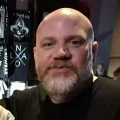
It’s been seven long years since cellist, singer-songwriter, composer and activist Ben Sollee has graced us with a new album. But the Lexington native/Louisville resident has certainly kept busy during that time: growing his family and his career as a composer for film, tv, and interactive media, which earned him an Emmy Award in 2018 for his score on the ABC special Base Ballet, and has led to recent work scoring the Peabody-nominated podcast Unreformed, as well as the films LAND from director Robin Wright, and Maggie Moore(s), a John Slattery film starring Tina Fey and Jon Hamm.
He also helped launch and continues to work with the nonprofit Canopy, (which he gets into a little more in our interview). However, during this time he also contracted COVID and suffered long-term symptoms that affected every aspect of his life and career. He lost his close friend and musical compatriot Jordan Ellis, as well as his father. These are some of the themes that make up Sollee’s new album, Long Haul – a ten-song collection of Sollee’s trademark blend of folk, bluegrass, jazz, and classical styles, but this time honing in on the influence of world music that he has only briefly experimented with in the past.
And on December 5th and 6th, Sollee brings the Long Haul tour home to Louisville for two unique, intimate performances at The Whirling Tiger. Each show promises to be a dynamic exploration of Sollee’s catalog, featuring fan favorites and new compositions, as well as collaborations with a slew of special guests.
LEO was recently given the opportunity to catch up with Sollee over the phone while he was on tour on the West Coast. Here’s what he had to say:

(This interview has been edited for length and clarity)
LEO: With the songs on Long Haul, you really embraced a much broader spectrum of world music than you have on past releases. What inspired that?
Ben Sollee: Embrace is a good word because I’ve always been inspired by world music, but I’ve kind of always felt like I couldn’t justify using it in my music. And on this record, in part because of the healing journey from long haul COVID, I decided to trust the resonance and not have to feel like I needed to explain it. If Polynesian music was somehow inspiring and moving me, then I would use that as an ingredient. And if music from Muscle Shoals was inspiring me, I’m going to use that as an ingredient and just try to just trust the resonance, wherever it might be.
I read that you had a couple different mantras when recording the new album, “Follow the resonance” and “Show our fingerprints.” Can you explain those?
“Follow the resonance” is follow your intuition on a gut level. I think a lot of times musicians, including me, kind of lose touch with what really inspires them for something that they think might be commercially viable or cool. And so that’s “Follow the resonance, trust the resonance,” because it’s most likely the most genuine expression of who I am right now, rather than trying to do anything conceptual. And then “Show our fingerprints” is a response to being in this automated age that we are in and marching deeper into where we’ve got all these algorithms and generative technologies that are increasingly being used by all sorts of industries as a replacement for human made stuff. So I wanted to make sure that it was clear that this music was created and made by humans. And so to do that, we really showed our fingerprints in the types of instruments that we chose to record with, and that’s woodwinds, choirs and hand percussion. And also in how we recorded it; making sure we were capturing the sound of those instruments being played, not just the sound of the instruments.
I know having long term COVID helped shape a lot of this record for you. What all did you go through when dealing with it?
So I got sick with COVID in October 2020, and I just didn’t get better. And that included symptoms like loss of smell and taste, and this kind of deep fatigue and body pain. There was a lot of vertigo and brain fog. I mean, it’s called brain fog, but it’s not really fair because that implies that you can still move through it. This was just debilitating and you couldn’t stay concentrated. And probably the worst thing was the anxiety and the depression that came along with that because you just feel so isolated from the world. And this was pre-vaccine and there were no therapies available for it. So I kind of put out the call to the universe and ended up changing a lot of things about my lifestyle including my diet; switching over a plant based whole food diet, really taking my sleep seriously and taking alcohol out of the mix, and I had to really explore breathing again because that had gotten dysregulated, then eventually coming around to the fact that exercise is just so important for health. So anyways it took about a year and a half, but eventually my symptoms resolved. Yeah, it was a long haul; it’s no lie, [laughs].

Was there ever a point when you were dealing with the symptoms that you thought “This is it, I’ll never be able to play or perform again”?
Yes, absolutely. The first tour in March of 2022, I went out to play some shows and I just couldn’t remember lyrics. Singing was really kind of painful and stuttered, and I just didn’t have the energy. It was exhausting, and I definitely walked off stage after one of those shows and just started crying because I thought for sure that it just wasn’t in the cards anymore to perform. But the more I sang and the more I just kept going, the better things got.
On Long Haul, your lyrics focus on celebrating life and living, and the music is vibrant and colorful. Was that your goal in writing this album?
I don’t know if I had really clear goals around this record. In the songs, I took on what’s called an emergent strategy, and that basically means getting people that you trust into a space and instead of looking for the perfect arrangement for the song, we’re looking for the most unique thing that can come out of these people in this moment in time. So everything was sort of a surprise as it came. But there was some intention of taking a more celebratory, vibrant approach to life. And that’s kind of represented in the song “One More Day”, which deals with a really tough subject; letting go of my longtime musical brother and collaborator Jordan Ellis, who took his life last year. It’s one of those things where I wanted it to be like an anthem or like a message in a bottle to anyone who might be struggling with that decision in their lives. And I wanted it to be something that was groovy that people would dance to, that would help them feel alive. And there’s a lot of that on the record. I wanted people to be able to sing along, so there’s call and answer moments with other voices. I wanted people to be able to move and dance and just kind of be embodied in their life. I was thinking somewhat about the live show, too. I wanted it to be an experience where people feel like they could connect to their bodies and the show experience.
Related

The song “Misty Miles” makes such a wonderful point about being satisfied with what you have. Can you tell me a little about the inspiration behind that?
In the long haul experience you just get so disconnected from your body. In the healing journey, I was really reflecting on moments that I’d felt truly connected and almost transcendent in a way, and one of those moments was a bicycle tour. We used to do these music tours by bicycle that we called “Ditch the Van” tours, and it was on one of those tours we were riding along the coast somewhere between Charleston and Savannah, and it was just this incredibly beautiful morning on a quiet road where there was some of that early morning fog and the light was coming in through the trees in this sort of strobing manner, and I just felt so present and alive in that moment. And it was just enough. Like, I wasn’t wanting to get anywhere. I wasn’t trying to get away from something. I was just riding on my bicycle in the morning and it was just perfect, and I wanted to write something that began there. But then at some point ambition kicks back in or the clock starts ticking again and you’re like, “I gotta get there,” or “We’re not making good enough time,” or “When’s lunch?” You know, when you just kind of come out of the moment. And that dissatisfaction seems to be at the root of a lot of the suffering in my life, and certainly the suffering in a lot of humanity right now, just not being able to be here for the experience. You can see that sharply in the election. There’s a lot of people that are disgruntled and not satisfied with the status quo and they’re not quite sure why. They can name a lot of things, many of which have been served up for them, but just in general they feel dissatisfied. But many of them at least like to pay attention to their current situation, like; “I do have a house,” and “Yeah, I do have friends,” and you can you start to see that actually it’s not too bad, really.

And that kind of bleeds over into what I was going to ask you about “When You Gonna Learn.” The lyrics seem to be a very powerful statement to what’s going on with the people in this country right now with the anger and division. Is that what you were envisioning when you wrote it, or were you directing it at something else entirely?
No, I think that’s the right path, at least for my intention of the song. People always hear it a little bit differently. That one is a bit of a message in the bottle for myself, really. Living right now as a father to both a teenager and two young girls who are at the magical ages of four and seven, I see my teenager transformed from somebody who had a sense of wonder of the world to having a sense of dread of the world. And then my girls, they’re just still so present, you know? They’re present for the leaves falling, they’re present for animals outside the window, or the games that they want to play that are so imaginative. They just love so easily and they feel so connected to the world. It’s a reminder that many of the things that folks are striving for as they age are not things that we have to work our way to, its things that we walked away from when we transition from being children. So just acknowledging the innate intelligence that we have, like, when you gonna learn that you already know the truth? It’s a dice roll to be here and you just gotta enjoy every little thing that’s here. And when you gonna learn that you are who you’re willing to be. We’re all just walking around as embodied ideas of who we think we are, who other people think we are, and all kinds of cultural identities. And the sad part about it is that we are kind of living fictions. But the happy part about that is it’s malleable. If you really say that I’m willing to be strong, I’m willing to be loving, I’m willing to be educated, I’m willing be these things, then you open up the opportunity and kind of grow into what you’re willing to be. But there’s some other heavier commentary in that song about some of the suffering that comes from this delayed reward of angels in the sky and devils in the sea too.

You’re as much of an environmentalist as you are a musician. Tell us about Canopy and how you became involved.
Canopy is a nonprofit organization that really became incorporated in 2019, but I started working with them in 2018, and we work with businesses in Kentucky to incorporate measure and grow their social or environmental mission. Which is to say there’s a lot of companies in Kentucky that intuitively do good in the community, but they don’t really measure it. So we want to help them track and report that because we see a clear need in between the private in the public space where we have a lot of nonprofit organizations that are doing a lot of good but don’t really have a lot of money, and we have a lot of businesses that have a lot of money and they’re not quite sure how to make an impact. We’re trying to fill in that space and it’s growing really nicely. The Canopy certifications; I can’t remember exactly how many companies, but I think 40 or 50 companies have gotten certified so that they can be very transparent about their impact. And that’s a big deal in Kentucky because we have a lot of small businesses and actually larger companies that are trying to compete out there in broader national space, and there’s a lot of people – whether they’re employees that are looking for a place to work or customers looking for a place to buy – that are looking for that third party certification to help them choose who they’re going to work with, and the Canopy certification is a way of doing that in the for-profit space.
Finally, what can we expect at the two shows you have coming up at The Whirling Tiger? Is this going to be two completely different sets? Will there be any surprises?
Yeah, this is the homecoming show. It’s my first and maybe only opportunity to bring together all the contributors on the record that I can’t afford to tour with, [laughs]. So yeah, we will have people performing with me that play with some pretty awesome bands out there; Dani Markham tours with Childish Gambino is going to be on the show. Alana Rocklin, who plays bass on the record and tours with STS9 is going to be playing with us. We’ll have lots of really fun guests that we can’t announce. But yeah, each night will be a different set, and I’m trying to really make this a gift to a community that supported me so much over these years. I took a hiatus off the road for about seven years and I wasn’t putting out records. I was growing my family. I was doing the building work with Canopy. I was doing film scores. I was recovering from long haul COVID. And I feel like I’m stepping back out there and I want to do that in a big way with these two Whirling Tiger shows.

Ben Sollee’s new album Long Haul is available now. Catch him live at The Whirling Tiger on Thursday, Dec. 5th and Friday, Dec. 6th. Advance tickets are $20 each night, or both nights for $35. VIP tickets are also available for $50 each night. Visit thewhirlingtiger.com for ticket information. For more information on Ben Sollee, visit bensollee.com.
Related Stories

My Morning Jacket’s Patrick Hallahan Talks New Album, Sobriety, And Possible Future MMJ Music Festival In Louisville
This article appears in Nov 20 – Dec 3, 2024.